Nasıl Bir Ekonomi Newspaper / We aim to become an alternative supplier to China
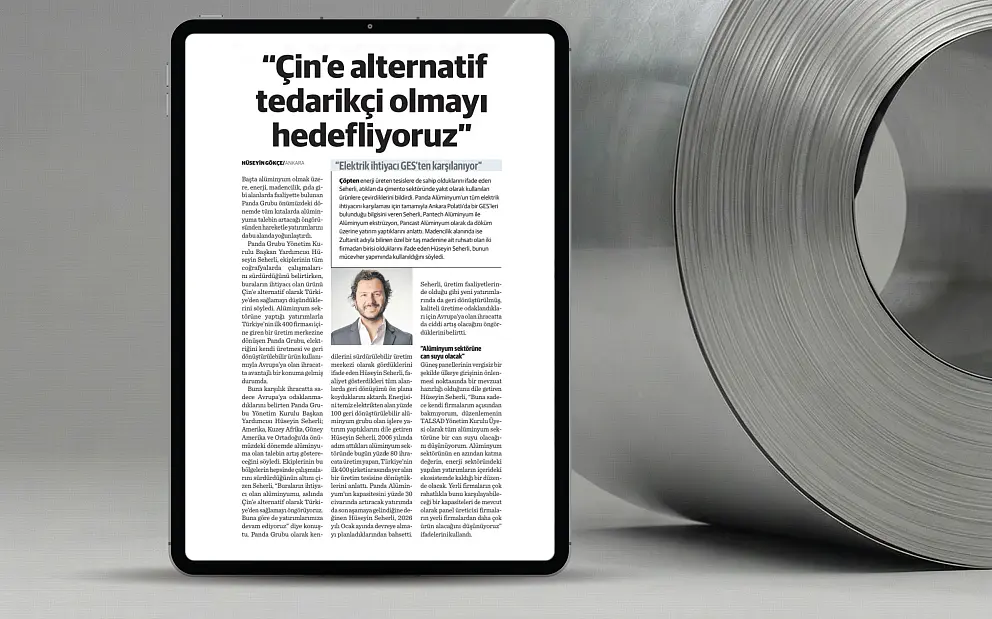
Panda Group continues to strengthen its operations in energy, mining, and food—particularly aluminum—in line with the anticipated global increase in aluminum demand. The Group aims to focus its investments primarily on the aluminum sector in the coming period.
Hüseyin Seherli, Vice Chairman of the Board of Panda Group, highlighted the rising demand across different regions of the world and stated that this need could be met through Türkiye. “We foresee increasing demand for aluminum in the United States, North Africa, South America, and the Middle East. We aim to supply the products required by these regions from Türkiye as an alternative to China,” he said.
Having become one of Türkiye’s leading production hubs through its investments in the aluminum sector, Panda Group also stands out with its sustainable production approach. By generating its own energy and utilizing recyclable materials, the Group gains a competitive advantage, particularly in the European market.
Panda Group has also made significant investments in the energy sector. Its solar power plant (SPP) located in Polatlı, Ankara, meets the entire electricity demand of Panda Aluminum. In addition, through its waste-to-energy facilities, the Group converts waste into products that can be used as fuel in the cement industry.
Within the Group, Pantech Aluminum continues its investments in extrusion, while Pancast Aluminum focuses on casting. In mining, Panda Group operates as one of the two companies holding the license for the precious gemstone known as “Zultanite,” which is used in jewelry production.
Emphasizing that sustainability is positioned at the core of their production processes, Seherli stated that they continue to invest in recycling-oriented and clean energy-supported production models. He noted that since entering the aluminum sector in 2006, the Group has reached a structure where 80% of its production is exported. He also added that a new investment, which will increase Panda Aluminum’s capacity by approximately 30%, is in its final stage and is planned to be commissioned in early 2026.
On the other hand, Seherli also commented on the regulations aimed at restricting the duty-free import of solar panels. He stated that this step would provide significant support not only for their company but for the entire aluminum sector. He added that domestic producers have the capacity to meet this demand and that such regulations would increase the sector’s added value and strengthen the local ecosystem.